Case study
How MenoLabs earns an extra $1.10 of profit on every order
MenoLabs is a leading direct-to-consumer wellness brand focused on menopause health. By partnering with Garner, they discovered unexpected purchase patterns and turned them into a scalable new revenue stream.
$1.10
Extra profit per order
12%
Conversion rate on upsells
8x
Higher CTR than 1P recs
Overview
MenoLabs is a science-first wellness brand dedicated to helping women navigate the complex transition of perimenopause and menopause. As they scaled their customer acquisition, they realized that many of their buyers had needs that extended beyond their own product line.
MenoLabs wanted to find a way to increase the lifetime value of their customers without having to develop entirely new products or distract from their core offering.
Challenge
Limited cross-sell options
MenoLabs' first instinct was to cross-sell their own products - but two structural realities made this difficult. Their assortment, while carefully curated, is relatively narrow, limiting the number of possible recommendations. And because their SKUs address distinct symptom categories, most 1P recommendations wouldn't be complementary to the item in cart. For example, a customer buying their hot flash relief supplement isn't necessarily a candidate for their mental energy support product.
The third-party tradeoff
That left third-party recommendations - but those came with their own concerns. Would recommending other brands dilute MenoLabs' hard-earned brand equity? And could it be done in a way that felt genuinely helpful rather than opportunistic? Post-purchase ad networks like Rokt and Disco offered one model, but their inventory - Capital One, Hulu+, and HelloFresh - was clearly built for reach, not relevance. MenoLabs wanted recommendations that felt like a natural extension of a customer's wellness journey rather than a monetization afterthought.
Solution
Understanding what each purchase reveals
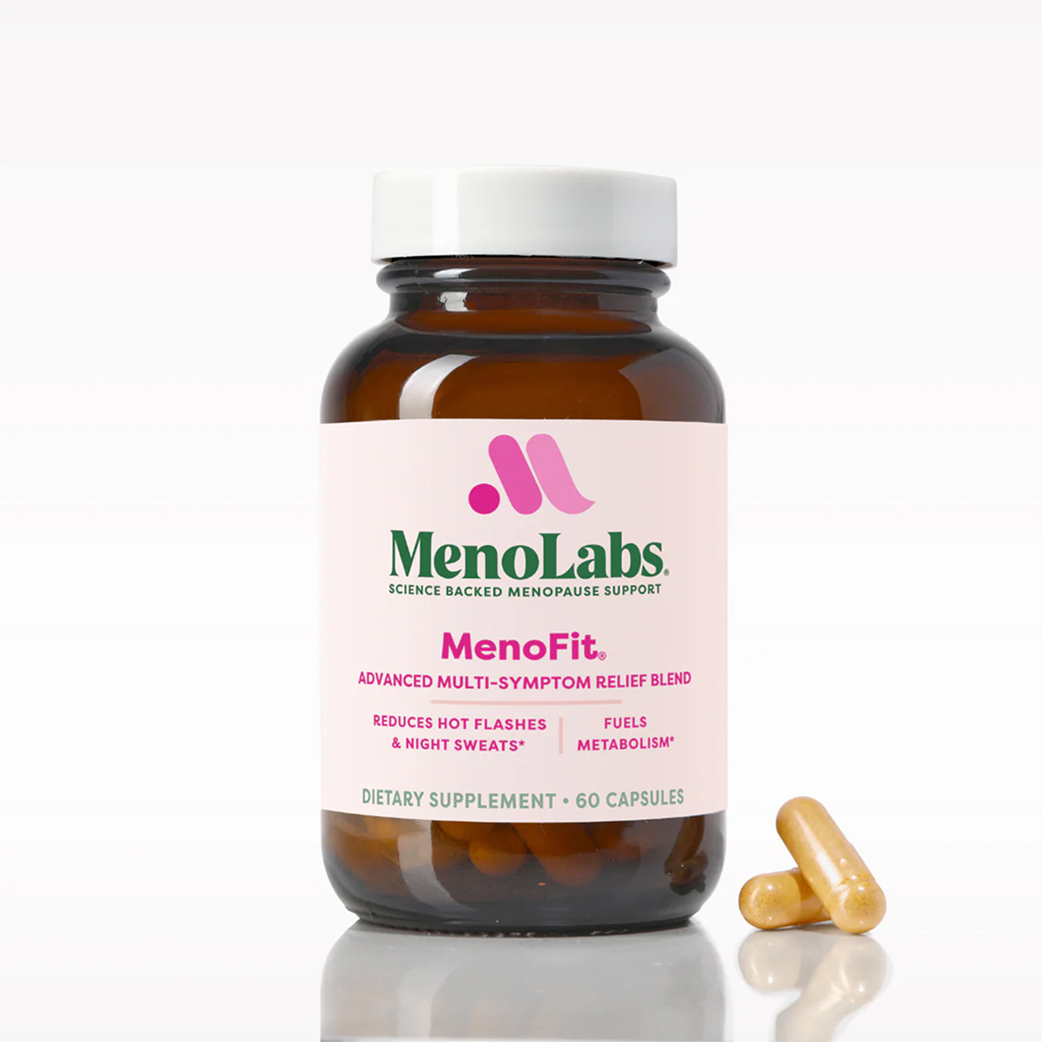
Garner started by researching every product in the MenoLabs catalog. Rather than treating all orders the same, we mapped each SKU to the specific health concerns that likely motivated the purchase. A customer buying MenoFit, for example, is probably experiencing hot flashes and metabolic frustration - which tells us a lot about what they might find helpful next. This turned the narrow catalog from a limitation into a strength: fewer products meant each one could carry a clearer signal.
A branded recommendation experience
From there, we built a recommendation widget designed to match the MenoLabs brand. Because each suggestion is tailored to the customer's likely needs, the experience works more like a personal wellness guide than a generic ad placement - pointing shoppers toward the next product that actually makes sense for their journey.
Curated partners, not the highest bidder
To keep those recommendations trustworthy, Garner takes a different approach than traditional ad networks. Instead of selling placement to the highest bidder, we proactively source and vet new brands for this specific audience, filtering out anything that doesn't meet MenoLabs' clinical standards. And to settle the question of first-party versus third-party recommendations, Garner runs both head-to-head and lets the data decide - the better-performing option always wins.
Results
Garner's model continuously tests hundreds of brands, learning which recommendations to surface based on what's in the cart. Because each suggestion is tailored to the customer's specific purchase, conversion rates are significantly higher than a one-size-fits-all approach - which translates directly into more profit per order. After a 4 week testing period, MenoLabs achieved a blended average incremental profit of $1.10 per order.
Third-party recommendations significantly outperformed first-party recommendations, with a 9.7% click-through rate compared to 1.2%. The likely reason: third-party recommendations unlocked complementary products customers actually needed next, while first-party relied entirely on brand affinity.
The model also surfaced clear, repeatable patterns: cooling bedding brands resonated strongly with customers who had just purchased hot flash relief supplements, while at-home fertility tests consistently performed well following purchases of MenoLabs' egg-health supplement.
Altogether, Garner's optimization produced:
- $1.10 of pure profit on every order
- 9.7% CTR on third-party recommendations
- 12% conversion rate on post-purchase upsells